
Board-on-Board vs. Stockade for Maximum Backyard Seclusion

Updated: Sep 22
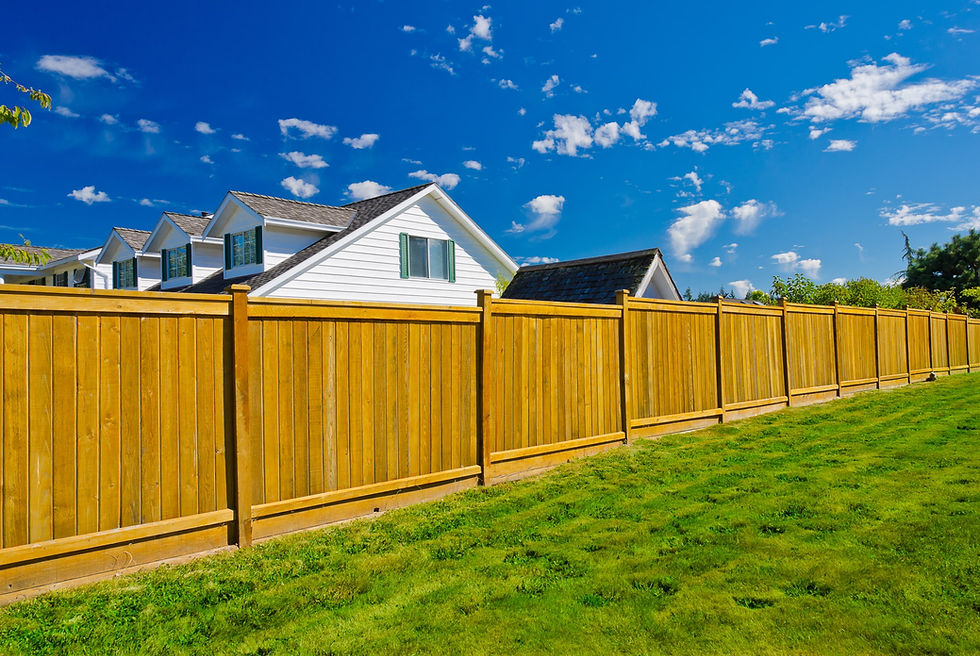
Transforming your backyard into a peaceful, private retreat is one of the most rewarding home improvement projects you can undertake. Whether you want to create a safe space for children and pets or simply enjoy your patio without feeling open to the surrounding neighborhood, a wood fence installation is an ideal solution.
Two of the most popular and time-tested wood fence styles are stockade and board-on-board. While both designs provide a physical boundary for your yard, they differ significantly in construction, longevity, aesthetics, and true privacy performance. Understanding the key differences between board-on-board and stockade fence installation will ensure you select the perfect option for your property and long-term seclusion goals.
Stockade Fencing: Classic and Cost-Effective
Stockade fencing is the traditional, widely recognized design that comes to mind when most people picture a classic wooden privacy fence. In a stockade fence, individual vertical pickets are installed side-by-side, abutting each other tightly along a set of horizontal support rails. The pickets are secured flat against one side of the fence framework, creating a continuous wooden wall with pointed or flat tops.
The primary advantage of stockade fencing lies in its simplicity and affordability. Because pickets are placed flat next to each other without overlapping layers, stockade fences require fewer raw materials and less labor to install compared to more complex styles. This makes stockade an attractive, budget-friendly choice for homeowners looking to enclose large acreage or set up a swift property boundary.
However, traditional stockade fencing has a notable limitation when it comes to long-term complete privacy. Wood is a natural, dynamic material that continuously absorbs and releases moisture as weather conditions change throughout the year. As fresh wood pickets dry out under the sun, they naturally shrink. Over time, this shrinkage creates visible gaps between the side-by-side pickets. While a newly installed stockade fence might look completely solid on day one, seasonal expansion and contraction will eventually reveal hairline gaps that allow sightlines directly into your backyard.
Board-on-Board Fencing: The Ultimate Privacy Solution
If absolute, zero-gap privacy is your top priority, board-on-board fencing is the premier choice. Unlike stockade styles, board-on-board fencing utilizes an overlapping, multi-layered picket construction technique. First, an initial layer of vertical pickets is nailed to the horizontal support rails with intentional spaces left between each board. Then, a second layer of pickets is installed over those gaps, overlapping the edges of the first layer by an inch or more on both sides.
This overlapping design creates a dimensional, heavy-duty barrier that completely eliminates sightlines from every angle. The primary benefit of board-on-board construction is its ability to withstand natural wood shrinkage over time. As the wood pickets dry and contract during hot summer months, the overlapping boards simply slide slightly across one another without ever exposing a gap. Even years after installation, a board-on-board fence maintains complete visual opacity, giving you uninterrupted backyard seclusion.
Beyond superior privacy, board-on-board fencing offers enhanced structural strength and visual appeal. The overlapping boards add thickness and weight to the fence structure, making it substantially more durable against strong winds and severe storm weather. From an aesthetic standpoint, the alternating layers create deep shadow lines and a rich, textured appearance that elevates the overall curb appeal of your property.
"Good Neighbor" Appeal vs. Single-Sided Framing
Another crucial factor to consider when choosing between these two styles is how the fence looks from both sides. A standard stockade fence is a single-sided structure. This means one side of the fence presents a smooth, clean wall of pickets, while the opposite side exposes the horizontal support rails and vertical fence posts. Depending on local neighborhood guidelines or homeowners association (HOA) rules, you may be required to face the "finished" side outward toward your neighbors, leaving you with the exposed structural framing on the inside of your yard.
In contrast, board-on-board fencing is frequently constructed as a "good neighbor" fence. Because the pickets can be staggered on alternating sides of the horizontal rails or built with overlapping depth on both faces, the fence looks equally finished and balanced from both sides. This eliminates disputes over which neighbor gets the "good" side of the fence and ensures your view from the patio looks just as refined as the view from the street.
Making the Right Choice for Your Property
Choosing between board-on-board and stockade fencing ultimately comes down to balancing your immediate budget against your long-term expectations for privacy and durability:
Select a Stockade Fence if you are working within a strict budget, need to enclose a large perimeter quickly, or are comfortable with minor gaps opening up as the wood seasons over time.
Select a Board-on-Board Fence if you want 100% complete privacy that lasts through every season, and you prefer a heavy-duty structure that resists storm damage and desire a rich, dimensional look that adds maximum value to your home.
By pairing quality materials with expert professional installation, either style will define your property boundaries. However, for homeowners who refuse to compromise on seclusion, board-on-board remains the gold standard in wooden privacy fencing.
Frequently Asked Questions
How much more expensive is a board-on-board fence compared to a stockade fence?
A board-on-board fence typically costs 20% to 30% more in materials and labor than a standard stockade fence. Because board-on-board fencing relies on an overlapping design, it requires roughly 30% more vertical pickets to cover the same linear distance. Additionally, the extra weight demands heavier-duty hardware and slightly more labor-intensive installation. However, many homeowners consider the higher upfront investment worthwhile due to its superior durability and enhanced curb appeal.
Which wood species is best for privacy fencing in Central Arkansas?
Western Red Cedar and Pressure-Treated Pine are the two most popular and effective wood choices for Central Arkansas fences. Cedar contains natural oils and tannins that make it exceptionally resistant to warping and rot in hot, humid climates. Pressure-treated pine is a more budget-friendly alternative that is chemically treated to resist subterranean termites and fungal decay.
What routine maintenance is required to keep a wood privacy fence looking new?
To maximize the lifespan of both stockade and board-on-board fences, apply a high-quality, penetrating oil-based stain or water-sealant every 2 to 3 years. Staining protects the wood fibers from UV fading and moisture absorption, which causes cracking and splitting. Keep grass and sprinkler overspray away from the bottom of the pickets, and perform a gentle power-wash or soft-wash with a mild wood cleaner whenever dirt or algae begins to accumulate.


Comments